

From PayPal to OpenUSD: How Payment Companies Are Reshaping Stablecoins
In the first two pieces of this payments series, CryptoLicense looked at card networks and banks.
Card networks are changing the settlement layer: Visa is using USDC for settlement, and Mastercard spent USD 1.8 billion to acquire BVNK as a bridge. Banks are changing the deposit layer: Lead Bank is building fiat rails, while Revolut is using 1:1 zero-spread conversion to reduce friction between fiat and on-chain assets for 75 million users.
The two layers are moving in different directions, but toward the same endpoint: on-chain settlement.
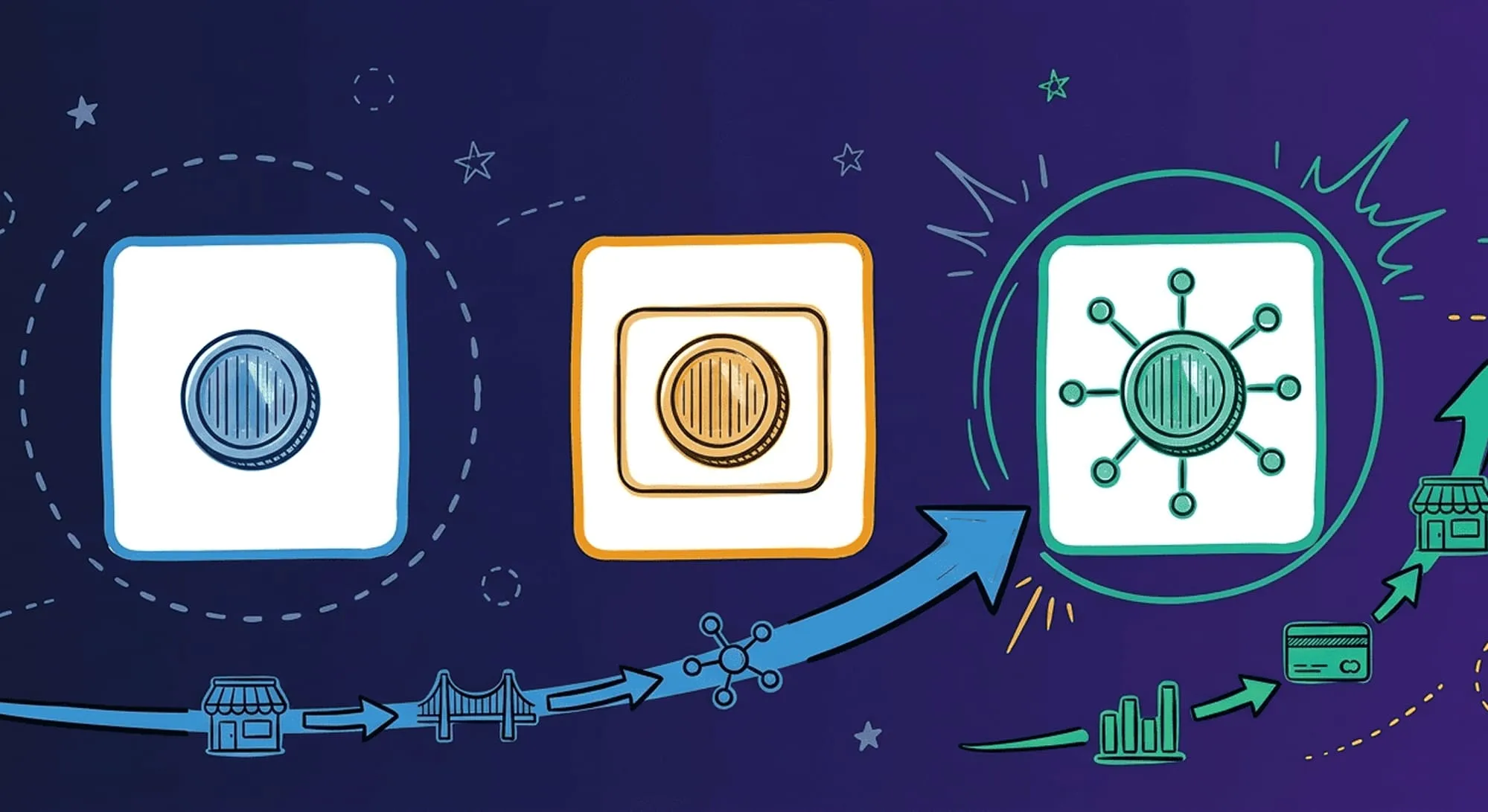
This piece turns to payment companies. In the article on banks, one role kept appearing but never quite stepped into the foreground: Bridge helps on-chain companies move funds in and out of fiat; Circle handles minting and redemption for SGB and Revolut; MoonPay helps Mastercard launch stablecoin cards. Banks provide the fiat foundation, but most banks still do not handle the on-chain execution layer. Payment companies are filling that gap.
Last week, a major new variable entered the stablecoin market: OpenUSD. More than 140 companies are involved. The public list includes Visa, Mastercard, Stripe, Coinbase, BlackRock and Google.
After the news came out, Circle’s share price plunged.
This is no longer just about one more dollar stablecoin. It is an open challenge from traditional payments and internet giants to independent issuers. OpenUSD returns reserve income, after operating costs, to the companies responsible for distribution and adoption. The rich economics of issuance are no longer left entirely to the issuer.
This article breaks that down. On the U.S. payments-company side, we look at how PayPal is building a platform dollar, and how Stripe and MoonPay are embedding stablecoins into existing systems. On the crypto-native side, we look at how Binance and Bybit are growing payment capabilities out of trading accounts. The two paths solve different problems, but they are beginning to converge.
Ⅰ. PayPal: The Platform Dollar
PayPal was one of the earliest companies to move, and its direction has been clear.
To understand why PayPal issued its own stablecoin, start with the distinction between USDC and PYUSD. USDC is an independent issuer’s stablecoin: a neutral base asset that anyone can integrate, with Circle earning income from reserves. PYUSD is a platform stablecoin embedded inside PayPal’s own ecosystem. Its core logic is to turn a stablecoin from an on-chain dollar anyone can use into a payment capability inside the PayPal system. USDC is about liquidity. PYUSD is about a closed-loop use case.
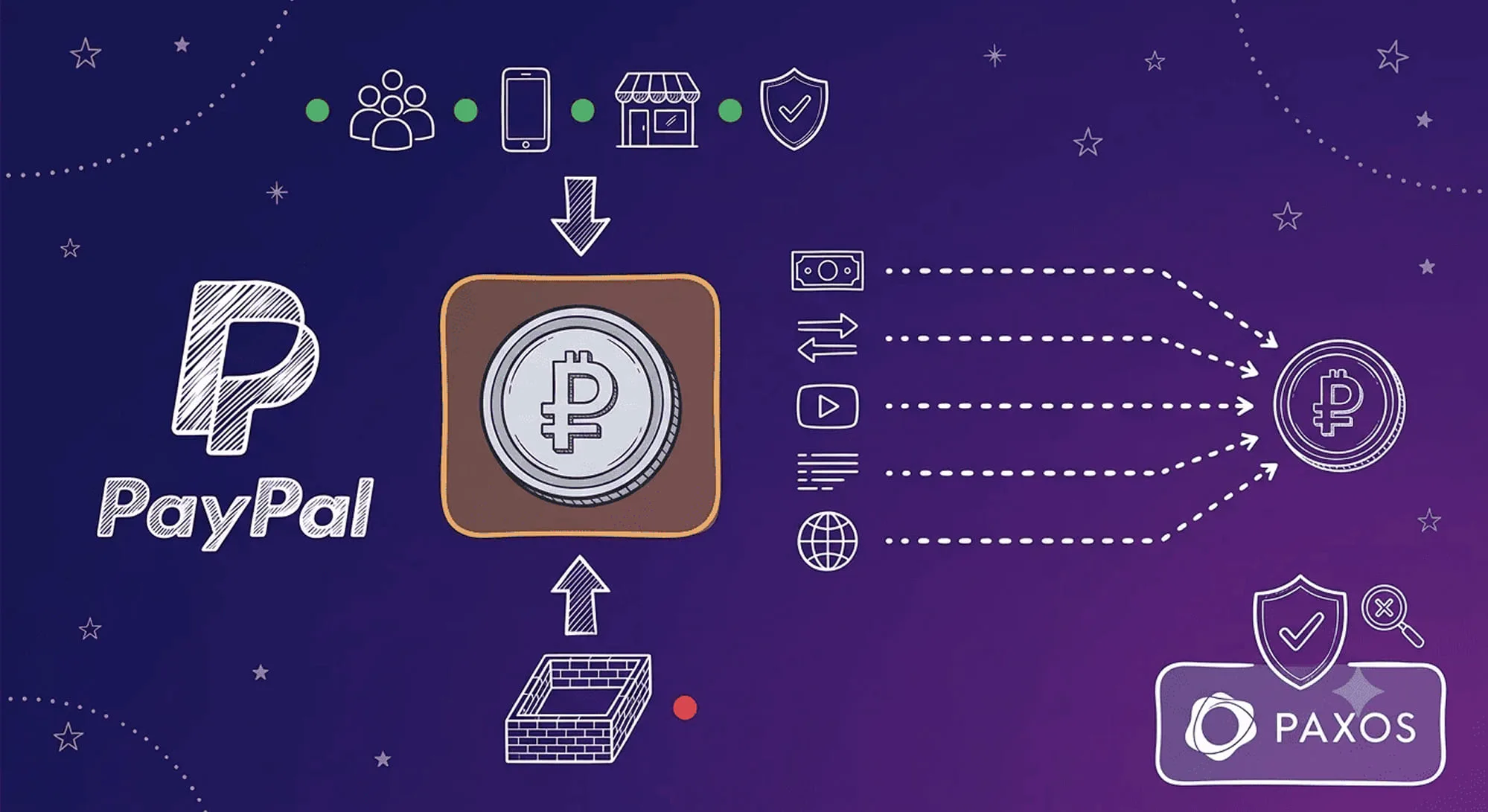
PayPal’s advantage is not the blockchain itself. Its advantage is more than 400 million active accounts, Venmo’s user base, a global merchant network, and a payments risk-control system. If PayPal only provides a channel for USDC, it earns tolls. If it issues its own stablecoin, the stablecoin becomes part of its own system rather than an external tool. User balances, merchant receipts and on-chain circulation all revolve around PayPal, and reserve income stays inside the group.
PayPal’s direction is clear: move PYUSD from an on-chain asset into a payment tool. PYUSD first launched on Ethereum in 2023. By 2025, the pace had clearly accelerated:
- support for bill payments;
- 1:1 zero-spread conversion on Coinbase;
- integration with YouTube creator revenue settlement;
- expansion to nine new chains.
At the beginning of 2026, PYUSD payments expanded to more than 70 markets.
The compliance route was a precondition for PayPal’s issuance, and it is also one of its moats. PYUSD is issued by Paxos, which holds a limited-purpose trust charter from the New York Department of Financial Services, or NYDFS, and is subject to state-level banking supervision. In June 2025, Paxos also obtained a national trust bank charter from the Office of the Comptroller of the Currency, becoming the first institution to hold both state and federal authorization for stablecoin issuance. In 2023, the SEC issued a subpoena relating to PYUSD and investigated its reserve and compliance arrangements. The investigation ended in 2025 with no enforcement action. By then, PYUSD had become one of the larger federally approved dollar stablecoins.
The compliance framework is in place, but the operational details still matter. In 2025, Paxos mistakenly minted around 300 trillion PYUSD because of an internal technical error, apparently entering 300 trillion instead of 300 million. The error was discovered and the tokens were burned within 22 minutes, and customer funds were not affected. The incident is a reminder that once stablecoins enter mainstream payments, minting authority, internal controls, technical audits and incident disclosure all become part of compliance. Any failure in the chain will be scrutinized at scale.
But a platform stablecoin has a built-in tension: its moat is also its boundary. PYUSD distribution depends on PayPal’s own ecosystem, so growth is constrained by PayPal’s user growth. PayPal’s full-year 2025 revenue grew only 4.3%. PYUSD’s market capitalization is around USD 3 billion, still far behind USDC’s more than USD 70 billion. A platform dollar is strong in use cases, but weak when it needs to break out of a closed ecosystem.
Ⅱ. Stripe: Laying the Rails, Then Letting Everyone Issue
Stripe has chosen a heavier path than PayPal, and it is worth looking at closely.
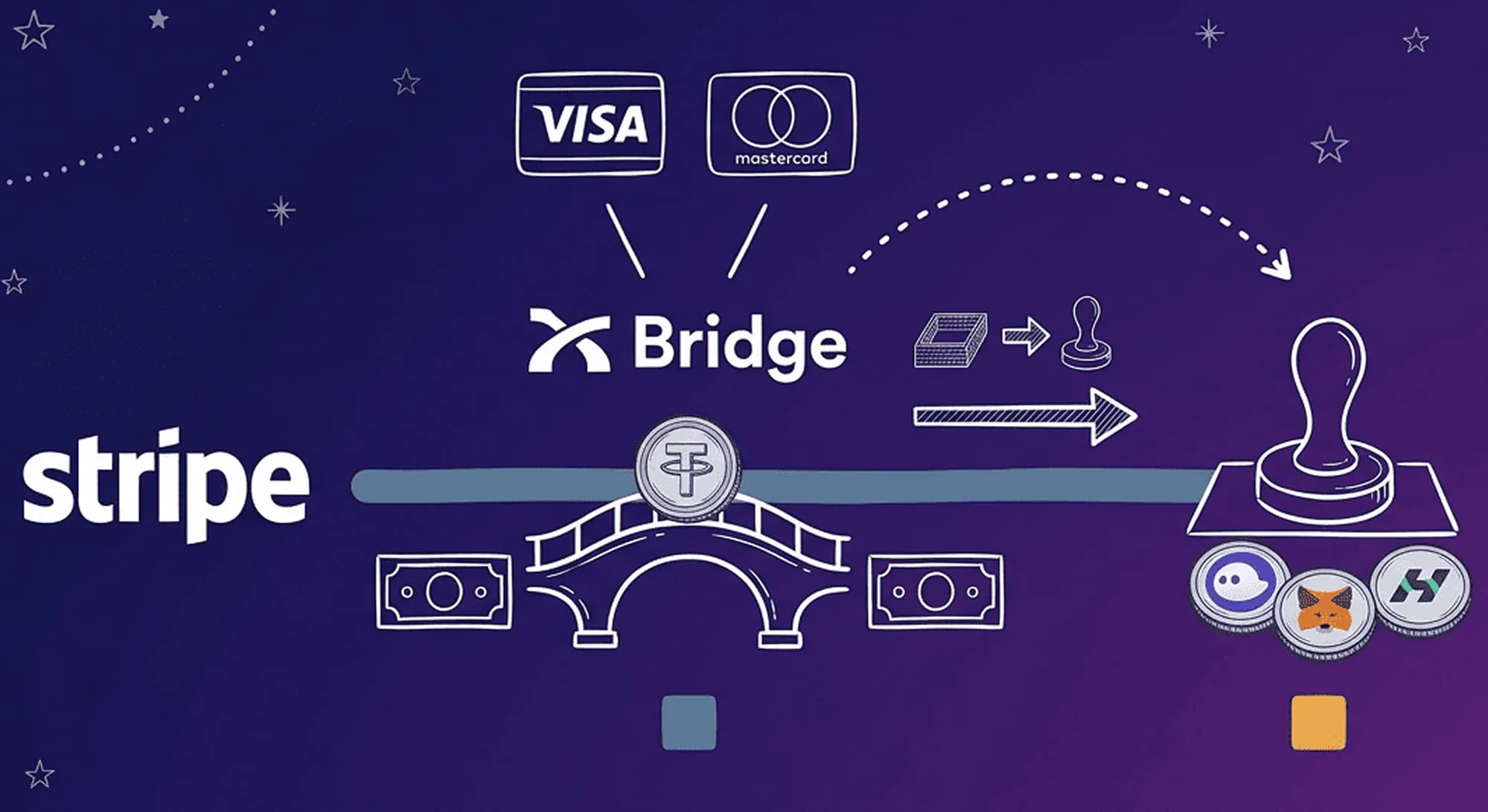
In 2025, Stripe acquired Bridge for USD 1.1 billion. Bridge does fiat in, stablecoin across the chain, fiat out. In substance, it is cross-border payment infrastructure built around stablecoins. After the acquisition, Bridge’s processing volume quadrupled in 2025, while it also connected to the Visa and Mastercard networks. Enterprises can move between traditional card networks and stablecoins without feeling the switch.
The significance of the acquisition needs to be understood in the context of Stripe’s overall scale. In 2025, businesses on Stripe processed USD 1.9 trillion in total payment volume, up 34% year on year, equivalent to roughly 1.6% of global GDP, across more than five million businesses. Stripe already controlled merchants, developers and payment APIs. Bridge added stablecoin settlement, fiat on- and off-ramps, banking relationships and cross-border funds movement. Together, stablecoins stop being an external plug-in and become a capability that can grow into Stripe’s existing payment interfaces. Merchants do not need to understand on-chain details. Developers do not need to change APIs. Settlement in the background becomes faster, cheaper and available 24/7.
But Stripe did not stop there. In September 2025, Stripe launched Open Issuance through Bridge, allowing any company to issue its own branded stablecoin. Phantom’s CASH token became the first stablecoin issued through the platform, followed by MetaMask’s mUSD and Hyperliquid’s USDH. The core logic of Open Issuance is that companies no longer need to rely on Circle’s or Tether’s stablecoins. They can control the product experience, mint and redeem without limits, and earn income from reserves.
That move says a lot. Stripe’s position has shifted from helping others distribute stablecoins to helping others issue stablecoins. In 2025, global stablecoin payment transaction volume doubled to around USD 400 billion, with about 60% coming from B2B payments. In its annual letter, Stripe explicitly described stablecoins as a strategic priority. When a company processing USD 1.9 trillion in payments each year treats stablecoins as core strategy, it is no longer just adding a new payment method. It is building infrastructure for the next generation of money movement.
Crypto payments infrastructure company MoonPay has taken a different route, but the direction is similar. It started with on-ramps and off-ramps, then acquired Helio to add merchant crypto acceptance, acquired Iron to add stablecoin infrastructure, and partnered with Mastercard to launch stablecoin cards. The logic is similar to Visa’s strategy in the first piece of this payments series: keep the front-end experience as unchanged as possible, while changing the settlement rails in the background. Users may hold stablecoins, but merchants do not necessarily need to touch stablecoins. When a purchase happens, conversion takes place in the background, and the merchant still receives fiat.
Stripe and MoonPay have one thing in common: neither requires users or merchants to understand on-chain details. The user still sees payment successful. The merchant still sees funds received. Only part of the back-end fund transmission has shifted from traditional bank wires to on-chain settlement. This is where traditional payment companies have an advantage. They do not need to educate the market from scratch. They only need to connect stablecoins as a new option inside existing systems.
But that is also where the problem lies. If payment companies only provide rails for USDC, USDT or PYUSD, they are valuable, but the core economics of the stablecoin industry do not sit in the rail. They sit in issuance and reserve assets. Over the past few years, stablecoin reserve assets have mainly consisted of three categories:
- short-term U.S. Treasuries;
- overnight reverse repurchase agreements;
- bank deposits and cash equivalents.
The interest income generated by reserve assets is the core of the stablecoin business model. Payment companies, wallets and exchanges help stablecoins circulate, but they do not necessarily share in that income. Building the rail has value, but it does not capture the core profit pool.
Ⅲ. Stripe Builds the Table: From Rails to Issuance
If all you do is provide the rail, reserve income remains out of reach. That pain point has always been there. Stripe decided not to remain only a rail provider.
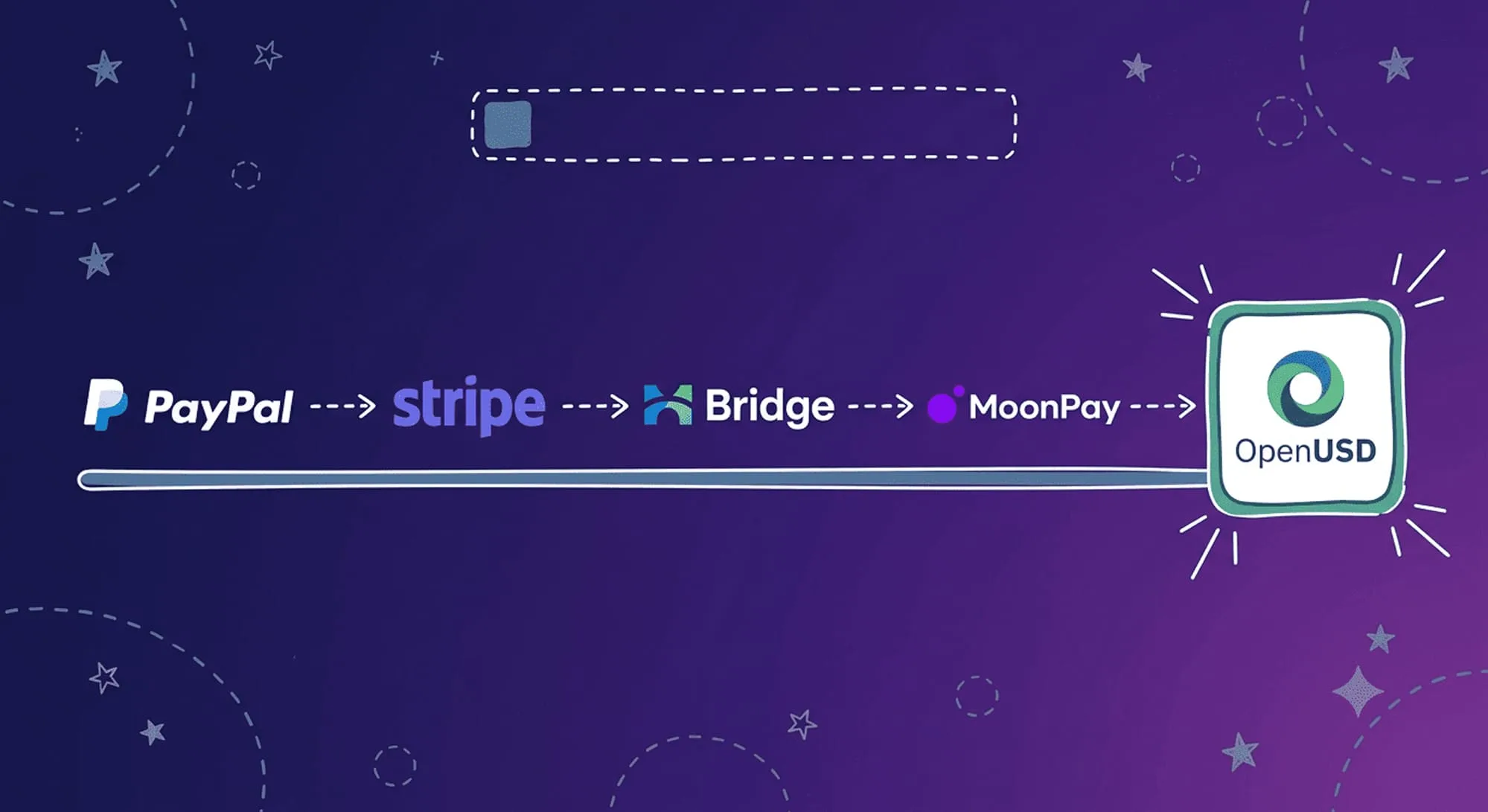
As discussed above, PayPal’s PYUSD is a platform dollar: strong in use cases, weak in ecosystem openness. Stripe has taken another path. It is building a table and bringing payment companies, banks, asset managers, technology companies and crypto infrastructure providers to sit at it together, issuing a shared stablecoin. That is OpenUSD.
OpenUSD is trying to become the next step after the platform dollar: a network dollar. Minting rights, governance rights and economic rights are shared. Whoever brings users, merchants, on-chain liquidity or real payment scenarios becomes part of the network. Reserve income, after operating costs, is distributed to ecosystem participants. Interests and roles are tied together.
The operating entity is an independent company called Open Standard. It is not controlled by any single participant, including Stripe, and is governed by a board made up of partner representatives. The first CEO is Bridge co-founder Zach Abrams. Given that Bridge was acquired by Stripe for USD 1.1 billion in 2025, Stripe is widely viewed as the main force behind OpenUSD. Stripe has already made clear that OUSD will become the default stablecoin on its platform. Technically, OUSD is already live on Solana and is planned to expand to Base, Polygon, Stellar, Ripple and other chains.
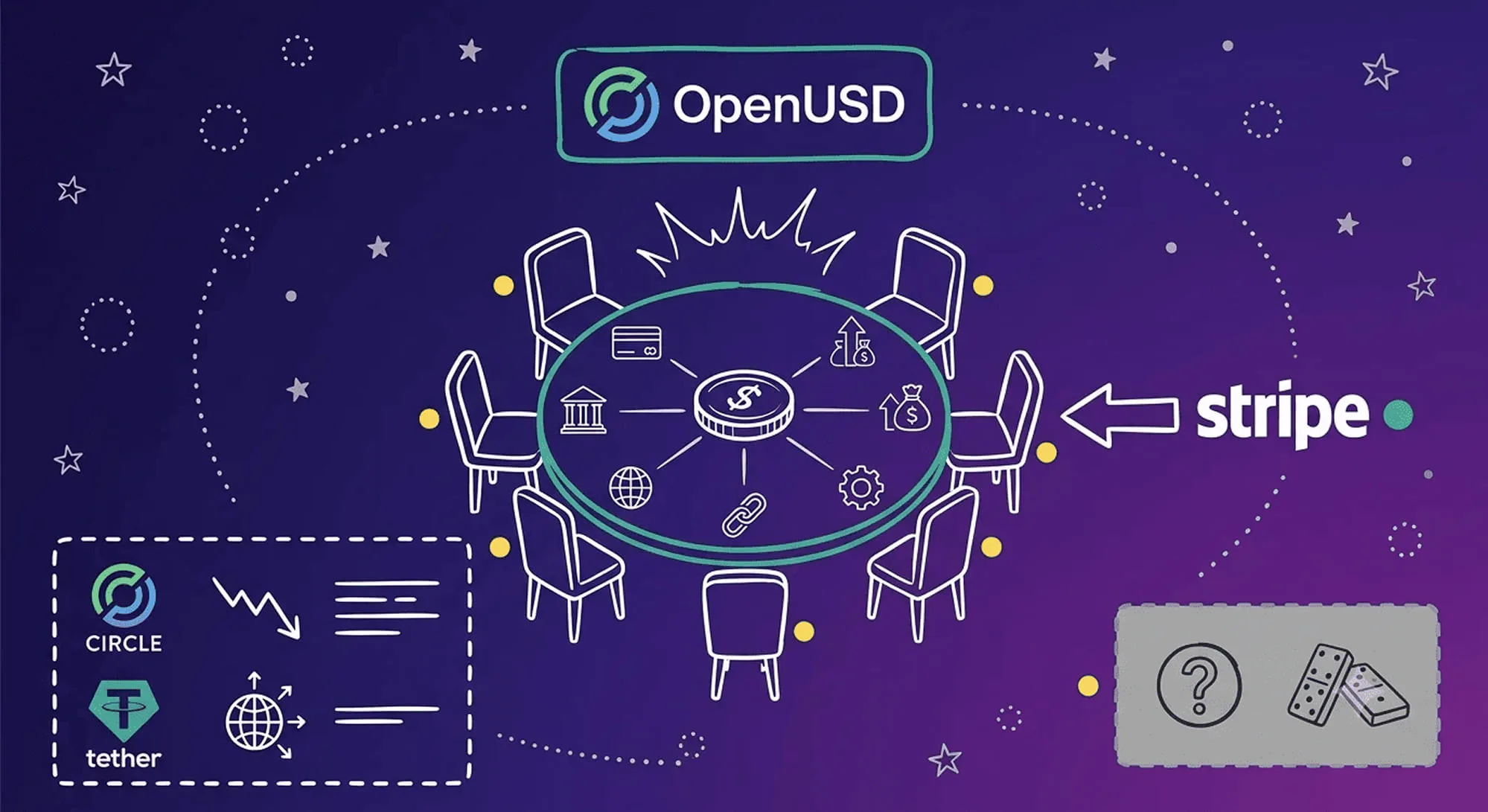
OpenUSD is designed around three core principles:
- zero-cost minting and redemption, with no cap;
- reserve-asset income returned to partners after a small management fee;
- joint governance by partners, rather than control by a single issuer.
This model directly challenges the industry convention under which Circle and Tether capture reserve interest exclusively.
USDC and USDT have the advantage of first-mover scale, liquidity and trust. OpenUSD’s potential advantage is its distribution network and its alignment of incentives. If Visa, Mastercard, Stripe, Coinbase, BlackRock and Google are all involved, the question for OpenUSD becomes whether it can be embedded into enough payment scenarios.
The market reaction was immediate: Circle’s share price fell more than 17% that day. Circle’s CEO responded with a long post, making three core points: zero-cost minting and redemption are not sustainable over the long term; distributing all the income would starve the infrastructure; and consortium-style products perform poorly at scale and with speed. He also pointed to Circle’s own history: Circle and Coinbase jointly created the Centre Consortium in 2018, and dissolved it in 2023. Tether CEO Paolo Ardoino’s response was much simpler: “Welcome OUSD, player 2 has entered the game.” The stance was clear: Tether’s moat is on the streets of Nigeria, Turkey and Argentina, not on Wall Street.
Circle and Tether each have their own position, but OpenUSD does raise complex compliance questions:
Who is the legal issuer?
Who custodies the reserve assets?
Who bears the redemption obligation?
Are the participants issuers, distributors, wallet service providers or payment service providers?
Could reserve-income sharing trigger securities, banking, money services business or other regulatory issues?
If OpenUSD circulates at the same time in the United States, Europe, Asia and on chain, how are responsibilities divided across jurisdictions?
There is also a historical lesson worth remembering. In 2019, Facebook led the launch of Libra together with Visa, Mastercard, Stripe and others. Within months, partners began withdrawing, and the project eventually went nowhere. Consortium projects have a low success rate in business history. The core problem is that joint ownership can mean no one is truly responsible. Whether OpenUSD repeats that pattern depends on how many of the 140-plus partners are willing to commit real business flow. So far, only Stripe has used the language of making it the default. The depth of other participants’ involvement remains to be seen.
Until these questions are answered, OpenUSD is still only a strong market signal. But that signal is important enough: stablecoin payments are no longer just a matter for issuers and exchanges. Distributors are starting to organize and claim their own position.
Ⅳ. Binance and Bybit: Payments Growing Out of Trading Accounts
The companies above are growing stablecoin capabilities out of the traditional payments system. Binance and Bybit are moving in the opposite direction: growing payment capabilities out of trading accounts and on-chain assets. The direction is different, but the endpoint is very close.

Binance Pay had a natural starting point: users already held crypto assets in their accounts. Payments did not need to start from zero. Binance only needed to turn trading-account balances into spendable balances. The growth numbers are telling. In 2024, Binance Pay processed about USD 72.4 billion in transaction volume and reached 41.7 million users. By 2025, the number of merchants supporting Binance Pay had grown from about 12,000 at the beginning of the year to more than 20 million, a 1,700-fold increase in ten months. Cumulative transaction volume exceeded USD 250 billion, covering 45 million users, with stablecoin settlement accounting for more than 98%.
These transactions are no longer confined to the crypto world. Binance Pay has started moving offline:
- Brazil: integration with Pix, the central bank-led instant payment network, allowing users to pay bills with Pix QR codes directly using crypto assets;
- Vietnam: direct connections to VietQR and MoMo, covering 90% of local merchants;
- Bhutan: the tourism authority integrated Binance Pay, allowing tourists to pay for flights and visas with digital assets.
For many cross-border sellers and travel-service providers, “receive stablecoins first, then convert into local fiat when appropriate” has already become an operational workflow.
But the compliance challenges are also clear. Exchange KYC is not the whole of payments compliance. Payment scenarios also require merchant KYB, transaction-purpose identification, cross-border funds-flow monitoring, sanctions screening, local payment licenses and consumer protection. For a globally operating platform such as Binance, which has faced regulatory pressure in multiple jurisdictions, the more payment activity moves offline and toward merchants, the more it needs local partners and regional compliance arrangements.
Binance is taking the route of paying directly from account balances. Bybit chose another route: borrowing the card networks. Bybit Card lets users hold crypto assets, but everyday spending is completed through card-network rails. On the merchant side, the experience is still familiar card acquiring, while asset conversion happens in the background. The advantage is that Bybit can rely on the existing acceptance footprint of card networks, without rebuilding merchant acceptance from scratch.
The Bybit security incident in February 2025, however, also showed that the risk perimeter of on-chain finance is expanding. Around USD 1.4 billion to USD 1.5 billion in ETH was stolen. On the surface, it was an exchange security incident. But the real warning for the stablecoin and payments industry is this: when a business depends on third-party wallets, signing tools, front-end interfaces and external infrastructure, security is no longer only an internal risk-control issue. The closer stablecoins get to consumer payments, the less users will distinguish whether a problem came from the issuer, wallet, rail or vendor. The brand facing the user will still bear the trust pressure.
Web3 platforms that want to do payments eventually need to connect to merchants, card networks, banks and local licenses. Traditional payment companies that want to do stablecoins eventually need to connect to wallets, on-chain liquidity and stablecoin issuance mechanisms. The two paths end in the same place.
V. Four Capabilities, One Entry Point
The previous four sections looked at what each company is doing. Here, we want to pull out the common pattern behind these cases.
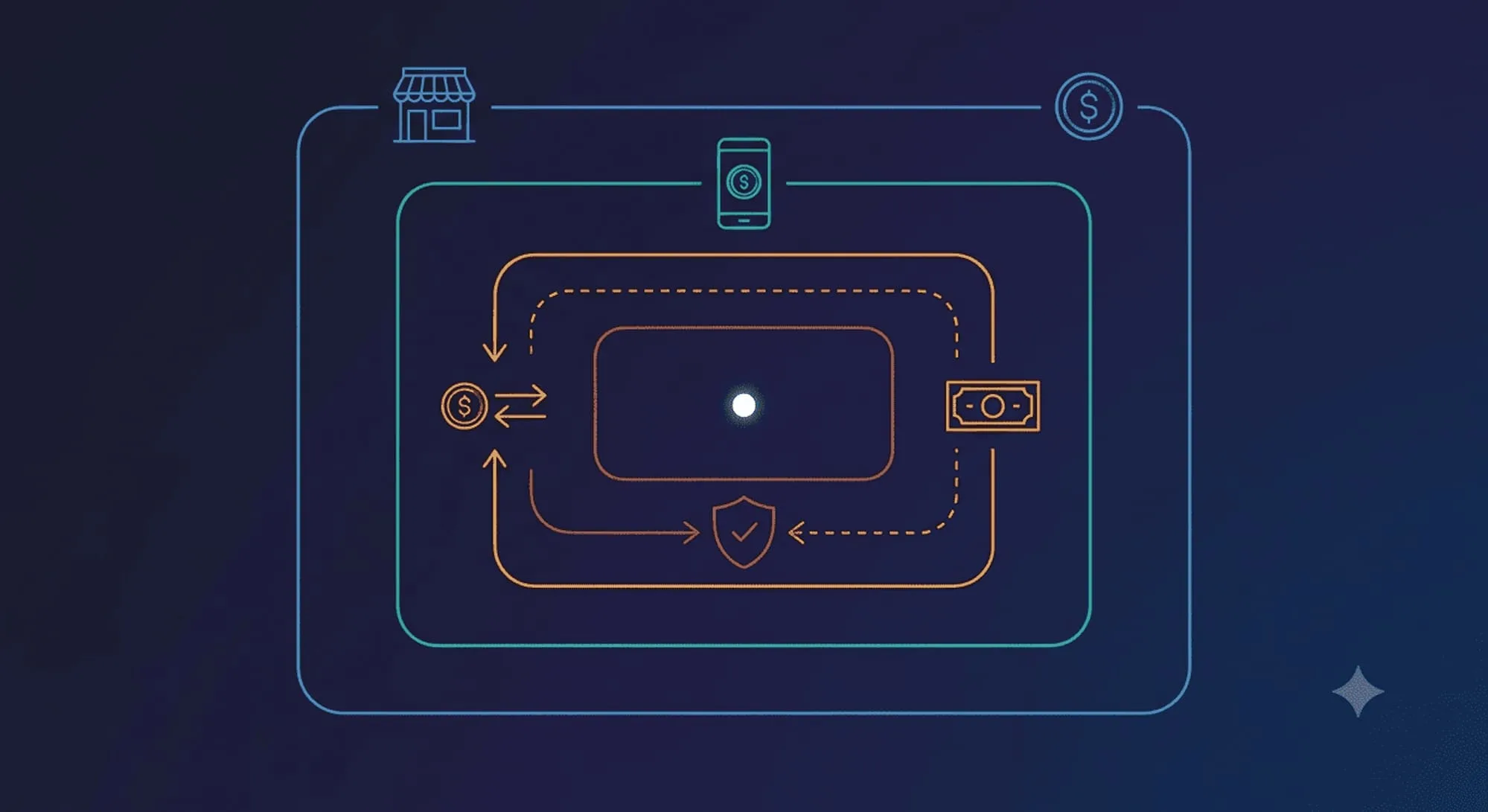
From PayPal, Stripe, MoonPay and OpenUSD to Binance Pay and Bybit Card, one thread runs through all of them: payment companies are doing far more than supporting stablecoins. They are turning stablecoins into payment capabilities inside their own systems. More specifically, they are building four things:
- Merchant access: enabling merchants to receive on-chain funds without understanding blockchains;
- User payments: hiding private keys and gas behind wallets and apps, so that a stablecoin feels to users like another dollar balance;
- Back-end conversion: letting users pay in stablecoins while merchants receive fiat, or letting businesses fund in fiat while the back end settles cross-border with stablecoins and converts back into local currency;
- Compliance orchestration: merchant onboarding, transaction monitoring, sanctions screening, suspicious activity reporting, consumer protection, funds segregation, audit records and incident response. This is an ongoing payments operating system, not a single on-chain transfer.
Whoever can hold these four pieces together reliably will control the real entry point into stablecoin payments.
Closing Thoughts
With three pieces in this payments series now complete, it is worth stepping back to the bigger picture.
First, the certainty. The trend is already happening. This is no longer a paper exercise. Card networks are changing the settlement layer. Banks are changing the fiat entry point. Payment companies are changing the payment experience for merchants and users. Web3 platforms are pushing trading accounts into real-world payments. OpenUSD represents an upgrade on the traditional payments side, from providing rails to organizing the network. The industry has passed through two stages and is now entering the third:
- Stage one: who can issue a stablecoin;
- Stage two: whose stablecoin has the deepest liquidity;
- Stage three, the current stage: who can place stablecoins into real payment scenarios on a compliant basis.
Then, the uncertainty. More than 140 companies have signed on, but it has not yet been confirmed that those names correspond to real distribution channels. Apart from Stripe’s commitment to make OUSD the default, the depth of other participants’ involvement remains to be seen. The compliance framework has not yet landed either. Consortium projects have a low historical success rate, and Libra is the obvious example.
Payment companies are not simply cutting out a layer from someone else in the stablecoin stack. Their role is to make stablecoins grow naturally out of the payments system. Whoever can do that will control a critical position in stablecoin payments: the compliant distribution network.
If you still have questions about the compliance path for stablecoin payments, CryptoLicense can work with you to think through product fit, licensing structure and the practical route to implementation.