
RWA Tokenization Made Simple: Get the License That Truly Unlocks Value
In the wave of cryptocurrency, Real World Asset (RWA) tokenization continues to heat up, becoming a focal point for both capital and markets. From stocks and bonds to commodities, nearly every class of real-world assets is exploring entry into the market through tokenization. Many companies are eager to join, believing that securing a license is the key to unlocking compliance.
But reality is far more complex. On one hand, the crypto industry is gradually aligning with traditional financial regulations. Yet, differing national standards create conflicting or missing rules, making practical implementation difficult. On the other hand, even if a company does obtain a license, if it does not align with its actual business model, the license provides little protection and may even introduce compliance risks.
So the question is: in the wave of RWA tokenization, what kind of license truly enables businesses to launch and grow sustainably? In this article, we will examine a recent real case from the market, analyze the licensing controversy involved, and explore which high-quality licenses are truly critical for business development—helping you seize opportunities in an increasingly competitive landscape.
When the Wrong License Backfires
Recently, a platform called MyStonks, which promotes itself as bringing U.S. stocks “on-chain,” fell into a storm of public criticism after freezing user funds. The company claimed the assets were “from non-compliant sources,” but such an approach is highly unusual under financial compliance standards. Normally, when suspicious funds are identified, a compliant institution should reject the transaction, return the money to the original sender, and file a Suspicious Activity Report with regulators. It should not seize customer assets outright. MyStonks’ actions raised serious doubts about its transparency and cast a shadow over its so-called “compliance.”
What stands out even more is MyStonks’ heavy reliance on its U.S. MSB (Money Services Business) license as the centerpiece of its compliance branding. The firm used this to project an image of “official U.S. backing.” In reality, FinCEN, the regulator overseeing MSBs, focuses only on anti-money laundering (AML) obligations, requiring firms to report suspicious transactions. It does not review business models, protect customer funds, or assess overall financial safety. Even more critically, the U.S. MSB license has limited regulatory value and does not align with the complexity of MyStonks’ business model. This mismatch is a key reason why skepticism in the market has continued to grow.
In short, the MyStonks case illustrates a clear lesson. When a company’s business model and its license are misaligned, the license becomes a liability rather than a shield. Instead of enabling growth, it amplifies risks and undermines trust.
In Licensing, Quality and Fit Outweigh Quantity
In the world of crypto finance and tokenization, many companies take comfort in the number of licenses they hold, assuming that the more licenses they have, the stronger their compliance posture. From a regulatory perspective, however, what truly matters is not quantity but the fit between the license and the business model.
Different licenses focus on very different aspects of regulation. Take the U.S. MSB license as an example. Its core requirement is to meet AML and KYC reporting obligations. It does not cover investor protection, fund custody, or financial product compliance. If a company’s main business involves security token issuance or secondary market trading, relying solely on an MSB license is clearly insufficient. In contrast, only by obtaining higher-tier licenses related to securities, investment services, or payment settlement can a company build a genuine compliance moat around its business model.
In short, a license is like a key. It only opens the right doors when it matches the business scenario. Blindly accumulating “low-barrier licenses” does not reduce risk. On the contrary, it can expose critical weaknesses under regulatory scrutiny. The key question for any company is not “How many licenses do we hold?” but “Which license will truly support our business?”
How Tokenization Firms Can Build an Effective Licensing Strategy
For tokenization businesses, the first step in planning a licensing strategy is to define business boundaries. Different business models require different forms of regulatory support, and the licensing requirements in each target market are the top priority.
Next, companies need to establish a clear licensing roadmap. Not every license has to be obtained at once. Instead, firms should prioritize based on core business needs and market entry goals. For example, securing the essential license to access a key market comes first, while supplementary licenses can be added step by step to expand the scope of operations.
At the same time, a solid licensing plan must balance flexibility and foresight. Since regulatory frameworks evolve rapidly, companies should leave room to upgrade their licenses, avoiding the risk of business growth outpacing compliance coverage.
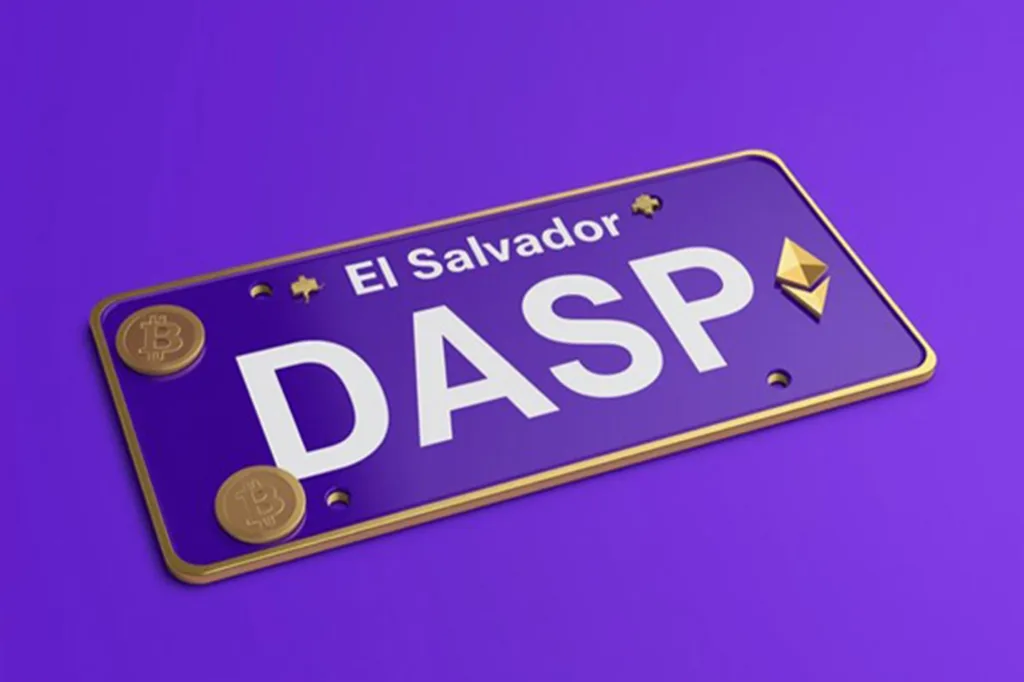
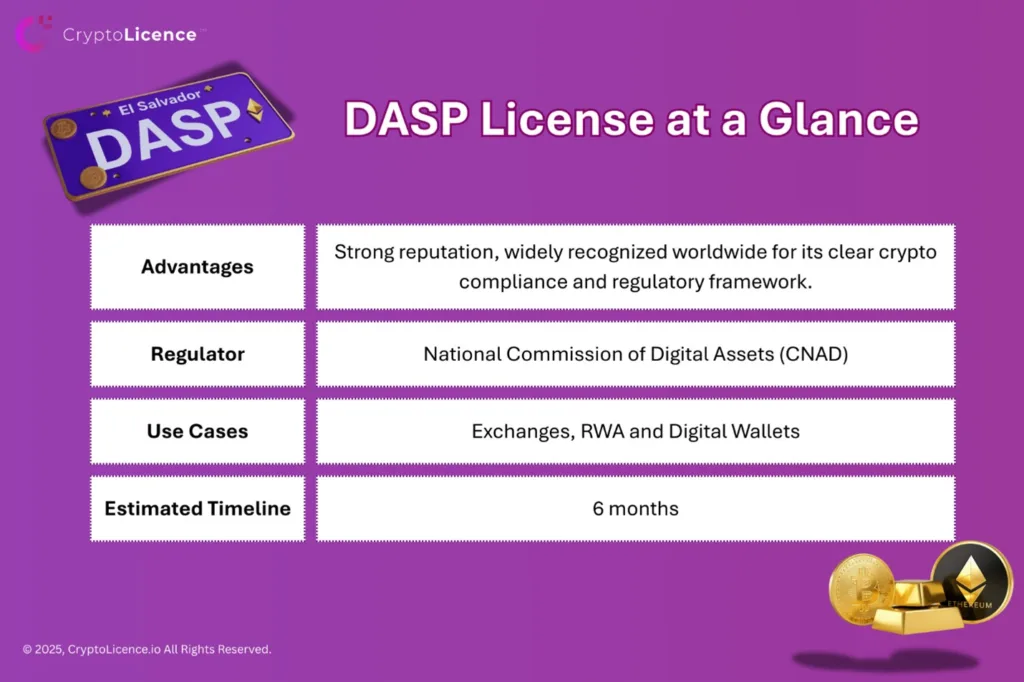
When it comes to high-value licenses, certain jurisdictions are widely recognized in the industry. One example is El Salvador’s Digital Assets Service Provider (DASP) license. This license provides a comprehensive legal framework for managing digital assets, covering services such as trading, custody, and management of cryptocurrencies (excluding Bitcoin). Stablecoin giant Tether leveraged this very license to successfully tokenize gold, demonstrating its real-world application and market credibility.
Tether’s Licensed Gold Tokenization Sets the Global Benchmark
In January this year, global stablecoin giant Tether obtained approval for an El Salvador DASP license and relocated its headquarters from the British Virgin Islands to El Salvador. Both the company’s CEO and COO also purchased property locally and secured residency status. This move highlights Tether’s determination to actively embrace regulation, while also aiming to strengthen its compliance credentials and capture greater market share.
After coming under El Salvador’s regulatory framework, Tether released its latest attestation for Tether Gold (XAUT) in April, covering the first quarter of 2025. The report confirmed that XAUT remains the world’s largest tokenized gold product by market capitalization. Each token is backed 1:1 by one troy ounce of physical gold, securely stored in world-class vaults in Switzerland.